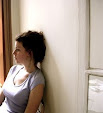
I have come to believe over and over again that what is most important to me must be spoken, made verbal and shared, even at the risk of having it bruised or misunderstood. That the speaking profits me, beyond any other effect.
I was forced to look upon myself and my living with a harsh and urgent clarity that has left me still shaken but much stronger. Some of what I experienced during that time has helped elucidate for me much of what I feel concerning the transformation of silence into language and action.
In becoming forcibly and essentially aware of my mortality, and of what I wished and wanted for my life, however short it might be, priorities and omissions became strongly etched in a merciless light, and what I most regretted were my silences. Of what had I ever been afraid? To question or to speak as I believed could have meant pain, or death. But we all hurt in so many different ways, all the time, and pain will either change or end. Death, on the other hand, is the final silence. And that might be coming quickly now, without regard for whether I had ever spoken what needed to be said, or had only betrayed myself into small silences, while I planned someday to speak, or waited for someone else’s words.
I was going to die, if not sooner then later, whether or not I had ever spoken myself. My silences had not protected me. Your silence will not protect you.
What are the words you do not yet have? What do you need to say? What are the tyrannies you swallow day by day and attempt to make your own, until you will sicken and die of them, still in silence? Perhaps for some of you here today, I am the face of one of your fears. Because I am a woman, because I am Black, because I am lesbian, because I am myself — a Black woman warrior poet doing my work — come to ask you, are you doing yours?
And of course I am afraid, because the transformation of silence into language and action is an act of self-revelation, and that always seems fraught with danger. But my daughter, when I told her of our topic and my difficulty with it, said, “Tell them about how you’re never really a whole person if you remain silent, because there’s always that one little piece inside you that wants to be spoken out, and if you keep ignoring it, it gets madder and madder and hotter and hotter, and if you don’t speak it out one day it will just up and punch you in the mouth from the inside.”
In the cause of silence, each of us draws the face of her own fear — fear of contempt, of censure, of some judgment, or recognition, of challenge, of annihilation. But most of all, I think, we fear the visibility without which we cannot truly live.
And that visibility which makes us most vulnerable is that which also is the source of our greatest strength. Because the machine will try to grind you into dust anyway, whether or not we speak. We can sit in our corners mute forever while our sisters and our selves are wasted, while our children are distorted and destroyed, while our earth is poisoned; we can sit in our safe corners mute as bottles, and we will still be no less afraid.
Each of us is here now because in one way or another we share a commitment to language and to the power of language, and to the reclaiming of that language which has been made to work against us. In the transformation of silence into language and action, it is vitally necessary for each one of us to establish or examine her function in that transformation and to recognize her role as vital within that transformation.
For those of us who write, it is necessary to scrutinize not only the truth of what we speak, but the truth of that language by which we speak it. For others, it is to share and spread also those words that are meaningful to us. But primarily for us all, it is necessary to teach by living and speaking those truths which we believe and know beyond understanding. Because in this way alone can we survive, by taking part in a process of life that is creative and continuing, that is growth.
And it is never without fear — of visibility, of the harsh light of scrutiny and perhaps judgment, of pain, of death. But we have lived through all of those already, in silence, except death. And I remind myself all the time now that if I were to have been born mute, or had maintained an oath of silence my whole life long for safety, I would still have suffered, and I would still die. It is very good for establishing perspective.
We can learn to work and speak when we are afraid in the same way we have learned to work and speak when we are tired. For we have been socialized to respect fear more than our own needs for language and definition, and while we wait in silence for that final luxury of fearlessness, the weight of that silence will choke us.
The fact that we are here and that I speak these words is an attempt to break that silence and bridge some of those differences between us, for it is not difference which immobilizes us, but silence. And there are so many silences to be broken.
(Originally delivered at the Modern Language Association’s “Lesbian and Literature Panel,” Chicago, Illinois, December 28, 1977. First published in Sinister Wisdom 6 (1978) and The Cancer Journals (Spinsters, Ink, San Francisco, 1980)
(Thank you to Leigh, for pointing me towards this excerpt.)
Monday, November 29, 2010

Sunday, November 21, 2010
A More Impossible Girl
There are, in fact, certain perks to spending too much time on the computer and being impulsive. These perks include things like buying cheap books at Powells.com, and buying tickets to see a band who reminds you of a type of home, or of a time, or of, oh, maybe it was just being twenty, in Boston, loose in the world and drawn (stunned) by the theatrics of it all, the sexual tension, the narrative. It's been a long time since I've seen the Dresden Dolls - haven't listened to their music in a long time really either - Amanda Palmer's solo album has gotten a bit of play with me, but it's not as if, when I lived in Pittsburgh & she came through town on tour, I ran out to see her, jumping around & screaming rabid-fan style. Last night was closer to that. Seeing Amanda & Brian come onstage - I felt as if Mass Ave had just been painted in front of me, as if Central Square, and Harvard Square, & Anna & Becca & the Fens & Landsdowne St. & crusty eye make-up & being hungover on the T & drinking coffee & smoking cigarettes on Boylston & lady crushes & jars of martinis &,&,&,&,&, - all of it there, all at the same moment. I've been homesick in Houston. Boston's a home to me, and the Dresden Dolls not only represent a home but a whole period of time, a whole emotional landscape. Epic satisfaction last night. I loved the whole fucking thing, and thought I somewhat regret not staying (as invited ) to have a drink with the sound guy David, I was spent and perfectly contained.
Last night's opener: Girl In A Coma - this song's been in my head all day (happy to find this video, as it's the only one that does justice to how extremely sexy lead singer Nina is. I mean, JEEZ.)
and... I don't know... I'm posting a song from the Dolls that I had a crazy visceral reaction to at last night's show. So much love. I found a version of the song online from around the same time (2004-5) when I would have first seen them in Boston.
[Reminder to self: you enjoy going out to rock shows alone in hot boots & dancing like a motherfucker. This has been a promotional message from the committee in favor of living it up. ]
That's all for now, chickadees. Go dream.
Last night's opener: Girl In A Coma - this song's been in my head all day (happy to find this video, as it's the only one that does justice to how extremely sexy lead singer Nina is. I mean, JEEZ.)
and... I don't know... I'm posting a song from the Dolls that I had a crazy visceral reaction to at last night's show. So much love. I found a version of the song online from around the same time (2004-5) when I would have first seen them in Boston.
[Reminder to self: you enjoy going out to rock shows alone in hot boots & dancing like a motherfucker. This has been a promotional message from the committee in favor of living it up. ]
That's all for now, chickadees. Go dream.
Wednesday, November 17, 2010
Acceptances, fall & shining
There's been a lot of lovely acceptances in my world lately - I'm just quiet about them. Here's some poems of mine forthcoming in Winter/Spring 2011:
~ long poem (5 pages!!) called River-heart, Radio in OH NO Magazine
~ in Lo-Ball Magazine, my poem For Derek, Missing for 8 Months
~ in The Normal School, look for two poems - The Closest I Come To Prayer These Days and The Night Life.
Also, not sure when this will air but, while visiting Pittsburgh, I'll be taping an episode of Prosody down at 91.3 WYEP, with guest host Renee Alberts, a woman who I think is fast becoming one of Pittsburgh's poetry saints, who, among so much else, curates a free poetry reading at the Carnegie Library of Pittsburgh, each Sunday afternoon.
Speaking of Pittsburgh and kind stars, a holler of congratulations to dear mentor Terrance Hayes, who tonight won the 2010 National Book Award for Poetry . Not just a mentor but a gracious, funny, generous guy and a good dad to boot. Hell yes, Terrance! Well-deserved, to put it mildly.
~ long poem (5 pages!!) called River-heart, Radio in OH NO Magazine
~ in Lo-Ball Magazine, my poem For Derek, Missing for 8 Months
~ in The Normal School, look for two poems - The Closest I Come To Prayer These Days and The Night Life.
Also, not sure when this will air but, while visiting Pittsburgh, I'll be taping an episode of Prosody down at 91.3 WYEP, with guest host Renee Alberts, a woman who I think is fast becoming one of Pittsburgh's poetry saints, who, among so much else, curates a free poetry reading at the Carnegie Library of Pittsburgh, each Sunday afternoon.
Speaking of Pittsburgh and kind stars, a holler of congratulations to dear mentor Terrance Hayes, who tonight won the 2010 National Book Award for Poetry . Not just a mentor but a gracious, funny, generous guy and a good dad to boot. Hell yes, Terrance! Well-deserved, to put it mildly.
Tuesday, November 16, 2010
Tons of [Gigantic] Fucken Sequins
Submissions at Gigantic Sequins are open, so editor-and-chief Kim Southwick and I are all stirred with excitement. It looks like the female/literary version of this man's enthusiasm:
go directly to our Submissions site HERE
If you haven't heard of us, well, we're a small print journal based out of Philadelphia/Houston. We like all types of writing with guts. Bones & muscle & guts. But also, ponies, say, if you are really jazzed about some beautiful ponies, we might like that sort of poem/non-fiction/fiction too.
Looking forward to reading your work !
go directly to our Submissions site HERE
If you haven't heard of us, well, we're a small print journal based out of Philadelphia/Houston. We like all types of writing with guts. Bones & muscle & guts. But also, ponies, say, if you are really jazzed about some beautiful ponies, we might like that sort of poem/non-fiction/fiction too.
Looking forward to reading your work !
Saturday, November 13, 2010
Sotto voce
Last night my friend John Sherer and I went to see Benjamin Britten's Peter Grimes at the Houston Grand Opera. It is - to simplify - the story of a fisherman accused of killing his apprentice - a story of 'stories' and guilt.
The work, a tragedy, is troubled by the same themes and allusions as works like Shakespeare's King Lear and Pirandello's Six Characters in Search of an Author. There, Man caught by, and raging out of, the elements of himself and nature; what catches in the audience's sense of humanity -- in Grimes as in Lear -- is the protagonist's harmartia - hubris. Then, there is Britten's strange and fascinating choice to include the figure of the author within the work, but as a silent almost inactive character referred to by the others as Dr.Crabbe. There is nothing, to me, quite as unsettling as seeing the maker within the made, particularly on stage or screen. That making figure, watching what unfolds, without interference (perhaps no longer with the ability to change or manipulate the outcomes) - there's something amazingly chilling about it. Perhaps this feeling comes from being aware that the stories we tell ourselves about ourselves are what makes us who we are. The idea of there, somewhere, being a maker, one who had molded, set the scene, stands back to watch -- part of what's so horrifying about this in Peter Grimes is that one eventually has the sense that the author, Dr.Crabbe, has lost the ability to manipulate the outcomes. He's created the characters, set the scene, and now, his characters have gone loose in the world. He seems to regret, to be helpless, even as he's received the gift artists hope for - don't they? - that their art will have a life of its own.
More to say about all these ideas (AND the fact that I saw one of my most dear sweet teachers, Lee Anne (insert married name, but used to be Pokego) last night for the first time in ten (!) years...) but the mundane mechanics of life call.
More about Peter Grimes and Benjamin Britten - here. And here, for more about the Houston Grand Opera.
The work, a tragedy, is troubled by the same themes and allusions as works like Shakespeare's King Lear and Pirandello's Six Characters in Search of an Author. There, Man caught by, and raging out of, the elements of himself and nature; what catches in the audience's sense of humanity -- in Grimes as in Lear -- is the protagonist's harmartia - hubris. Then, there is Britten's strange and fascinating choice to include the figure of the author within the work, but as a silent almost inactive character referred to by the others as Dr.Crabbe. There is nothing, to me, quite as unsettling as seeing the maker within the made, particularly on stage or screen. That making figure, watching what unfolds, without interference (perhaps no longer with the ability to change or manipulate the outcomes) - there's something amazingly chilling about it. Perhaps this feeling comes from being aware that the stories we tell ourselves about ourselves are what makes us who we are. The idea of there, somewhere, being a maker, one who had molded, set the scene, stands back to watch -- part of what's so horrifying about this in Peter Grimes is that one eventually has the sense that the author, Dr.Crabbe, has lost the ability to manipulate the outcomes. He's created the characters, set the scene, and now, his characters have gone loose in the world. He seems to regret, to be helpless, even as he's received the gift artists hope for - don't they? - that their art will have a life of its own.
More to say about all these ideas (AND the fact that I saw one of my most dear sweet teachers, Lee Anne (insert married name, but used to be Pokego) last night for the first time in ten (!) years...) but the mundane mechanics of life call.
More about Peter Grimes and Benjamin Britten - here. And here, for more about the Houston Grand Opera.
Tuesday, November 9, 2010
For Fall:
[The poet] diffuses a tone & spirit of unity, that blends, and (as it were) fuses, each into each, by that synthetic and magical power, to which I would exclusively appropriate the name of Imagination. This power . . . reveals itself in the balance of reconcilement of opposite or discordant qualities. (304)
-Coleridge
~ ~ ~ ~
~ ~ ~ ~
Sleepwalk Ballad - Federico García Lorca
~ ~ ~ ~
-Coleridge
~ ~ ~ ~
~ ~ ~ ~
Sleepwalk Ballad - Federico García Lorca
~ ~ ~ ~
Saturday, November 6, 2010

Tuesday, November 2, 2010
Two poems I'm thinking of today, rattling around with a wild fever
Those Winter Sundays
by Robert Hayden
Sundays too my father got up early
And put his clothes on in the blueback cold,
then with cracked hands that ached
from labor in the weekday weather made
banked fires blaze. No one ever thanked him.
I'd wake and hear the cold splintering, breaking.
When the rooms were warm, he'd call,
and slowly I would rise and dress,
fearing the chronic angers of that house,
Speaking indifferently to him,
who had driven out the cold
and polished my good shoes as well.
What did I know, what did I know
of love's austere and lonely offices?
Archaic Torso of Apollo
by Rainer Maria Rilke
translated by Stephen Mitchell
We cannot know his legendary head
with eyes like ripening fruit. And yet his torso
is still suffused with brilliance from inside,
like a lamp, in which his gaze, now turned to low,
gleams in all its power. Otherwise
the curved breast could not dazzle you so, nor could
a smile run through the placid hips and thighs
to that dark center where procreation flared.
Otherwise this stone would seem defaced
beneath the translucent cascade of the shoulders
and would not glisten like a wild beast's fur:
would not, from all the borders of itself,
burst like a star: for here there is no place
that does not see you. You must change your life.
by Robert Hayden
Sundays too my father got up early
And put his clothes on in the blueback cold,
then with cracked hands that ached
from labor in the weekday weather made
banked fires blaze. No one ever thanked him.
I'd wake and hear the cold splintering, breaking.
When the rooms were warm, he'd call,
and slowly I would rise and dress,
fearing the chronic angers of that house,
Speaking indifferently to him,
who had driven out the cold
and polished my good shoes as well.
What did I know, what did I know
of love's austere and lonely offices?
Archaic Torso of Apollo
by Rainer Maria Rilke
translated by Stephen Mitchell
We cannot know his legendary head
with eyes like ripening fruit. And yet his torso
is still suffused with brilliance from inside,
like a lamp, in which his gaze, now turned to low,
gleams in all its power. Otherwise
the curved breast could not dazzle you so, nor could
a smile run through the placid hips and thighs
to that dark center where procreation flared.
Otherwise this stone would seem defaced
beneath the translucent cascade of the shoulders
and would not glisten like a wild beast's fur:
would not, from all the borders of itself,
burst like a star: for here there is no place
that does not see you. You must change your life.
Monday, November 1, 2010
The Inconsolables
I'm about 50 pages into "Heaven's Coast," a memoir by Mark Doty. The book found me precisely when I needed it, in the middle of a season of old trauma and grief. It's an incredibly, incredibly beautiful book. I wrote Mark a note today on Facebook, but thought that I would share it here - why not? The questions I have are so gnawing, I might as well fling them into whatever space is available.
I've been having an ongoing conversation with a friend about elegy, which has spread into a conversation also about consolation and catharsis. My friend's basic thought can be summarized inthat elegy "does nothing" - he finds no consolation in writing poems about the traumatic events of his life, but returns to them over & over involuntarily - this time of year, for both of us, the record skips.
The act of writing elegies for the same event or person over and over seems perhaps to be nothing more than the wild impulse of disbelief focused into page, the clearest, smallest space we can understand, a place where, as writers, we have the illusion (maybe) of manageability. My friend writes with no hope for consolation, with no hope that others might find his work cathartic (if they do, I think he's pleased, but he doesn't "aim" towards it). I haven't quite gotten there - I've an odd sense of responsibility surrounding trauma, surrounding death. I wonder, lately, if my sense of responsibility comes only from wanting the experiences to feel extremely unique - the desire to have been "chosen" almost, as some sort of voice to speak for those unable to express their traumas that are like mine. To have terrible things happen, and to not have a sense that they've happened for a reason - it leaves us with nothing almost, doesn't it? But there must be a space after reason - these things happen...and then life continues happening, and we go on, or we don't..
My friend suggests that there are some of us who are inconsolable, and I began to wonder if what's inconsolable gives us a type of terrible privilege, this sharp access to a sense of mortality, and perhaps, humanity.
I could babble about these things for awhile, as they've been a kind of film over the rest of my life lately, but perhaps as I continue to read "Heaven's Coast," I'll find more answers, or at least different lenses, which, in fact, might be as close to consolation as I'm going to get. Not so bad for a poet.
I've been having an ongoing conversation with a friend about elegy, which has spread into a conversation also about consolation and catharsis. My friend's basic thought can be summarized inthat elegy "does nothing" - he finds no consolation in writing poems about the traumatic events of his life, but returns to them over & over involuntarily - this time of year, for both of us, the record skips.
The act of writing elegies for the same event or person over and over seems perhaps to be nothing more than the wild impulse of disbelief focused into page, the clearest, smallest space we can understand, a place where, as writers, we have the illusion (maybe) of manageability. My friend writes with no hope for consolation, with no hope that others might find his work cathartic (if they do, I think he's pleased, but he doesn't "aim" towards it). I haven't quite gotten there - I've an odd sense of responsibility surrounding trauma, surrounding death. I wonder, lately, if my sense of responsibility comes only from wanting the experiences to feel extremely unique - the desire to have been "chosen" almost, as some sort of voice to speak for those unable to express their traumas that are like mine. To have terrible things happen, and to not have a sense that they've happened for a reason - it leaves us with nothing almost, doesn't it? But there must be a space after reason - these things happen...and then life continues happening, and we go on, or we don't..
My friend suggests that there are some of us who are inconsolable, and I began to wonder if what's inconsolable gives us a type of terrible privilege, this sharp access to a sense of mortality, and perhaps, humanity.
I could babble about these things for awhile, as they've been a kind of film over the rest of my life lately, but perhaps as I continue to read "Heaven's Coast," I'll find more answers, or at least different lenses, which, in fact, might be as close to consolation as I'm going to get. Not so bad for a poet.
Subscribe to:
Posts (Atom)